Post-SpaceCom 2026, the space industry’s primary bottleneck is no longer launch but infrastructure. While launch reliability and cadence have improved, ground systems, facilities, spaceports, and execution frameworks have not scaled at the same pace. Sustained space operations now depend on standardized, production-ready infrastructure designed for repeatability.
Why Is Space Infrastructure Now the Biggest Bottleneck?
At SpaceCom 2026, leaders across government, commercial space, and regional investment ecosystems converged on a shared realization. Getting to orbit is no longer the hardest problem in space. Operating reliably, repeatedly, and at scale is.
Launch vehicles have matured. Reliability has increased. Cadence is accelerating across both large and small launch providers. Yet the systems that support missions before launch and sustain them afterward are under strain.
Space is no longer experimental. It has become foundational infrastructure for communications, defense, navigation, climate monitoring, and global connectivity. The systems that support space operations, however, still reflect a project-based era that assumed low frequency, bespoke missions, and long timelines.
This mismatch now defines the industry’s limiting factor.
How Did Launch Capability Outpace Space Infrastructure?
During the Space Congress Day 1 Opening Keynote, SpaceCom leadership framed the industry’s inflection point:
“Satellites became infrastructure. Data became connectivity, and space-enabled systems quietly became essential to modern civilization. Today, the focus is no longer just reaching space. It is building what comes next.”
This statement captured a structural shift. When space assets become critical infrastructure, success is measured less by technological novelty and more by throughput, reliability, and lifecycle efficiency.
Launch systems benefited from decades of focused investment, iterative reuse strategies, and market competition. Infrastructure did not receive the same attention. Facilities, ground systems, regulatory workflows, and integration environments evolved slowly, often customized for individual missions rather than scaled operations. As launch cadence increases, those legacy assumptions are now exposed.
Why Are Ground Systems the New Critical Path for Space Missions?
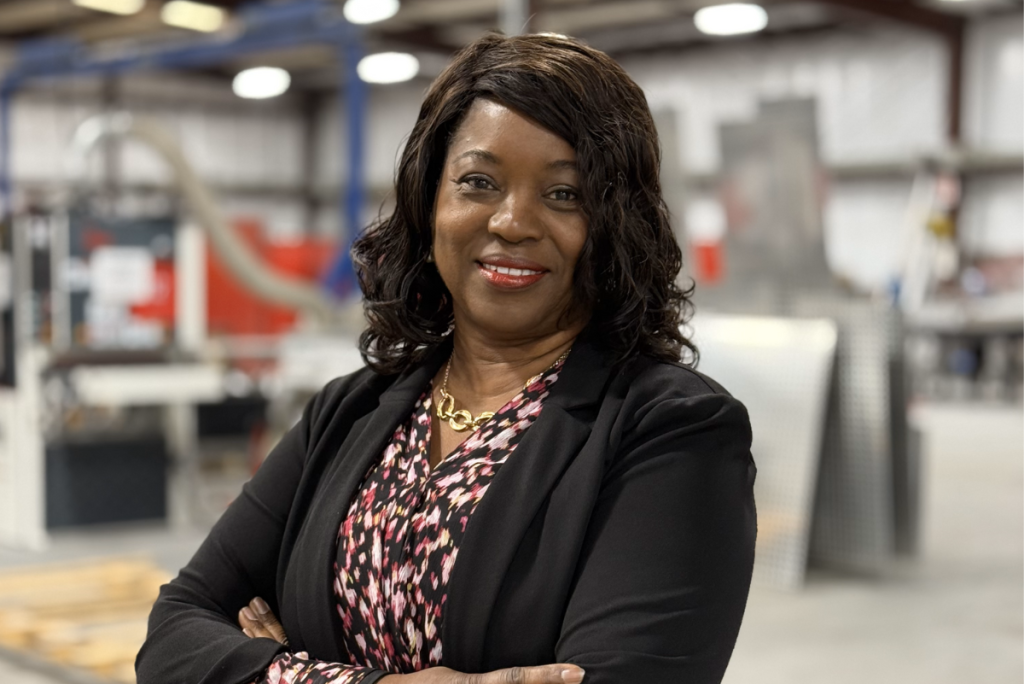
In the session From Tarmac to Tomorrow: Ground Systems Driving Satellite Operations, speakers repeatedly emphasized that ground systems now define mission timelines. Carol Craig, CEO of Cittaspace, described the mindset shift required as organizations scale:
“We’re thinking of it more from a mission perspective. And that means you’re thinking about the entire life cycle. Whether it’s testing environments, policies — everything has the opportunity to slow you down.”
When cadence increases, inefficiencies compound. Integration bays become congested. Environmental testing queues lengthen. Safety reviews stack. Ground support equipment must be reconfigured repeatedly. Each step introduces schedule risk. Craig later identified the deeper structural issue:
“We look at satellite manufacturing or each mission sort of as a project as opposed to production. With production, you’ve got to be thinking about the flow. And that’s where it starts to back up — it goes to testing.”
Ground systems designed for projects do not behave well under production-like conditions. Flow breaks down, handoffs increase, and throughput collapses under demand.
Why Does Project-Based Infrastructure Fail at Operational Scale?
Much of today’s space infrastructure was optimized for uniqueness. That optimization now creates friction. Facilities were designed around individual payloads. Ground support equipment was customized for specific vehicles. Testing environments assumed long dwell times and low turnover. These decisions made sense when launches were rare. At scale, they become liabilities. Robert Fabian, COO of ViaSpace, described how legacy assumptions constrain growth:
“Historically, rockets and their launch pads have been unique constructs. You don’t take a rocket designed for pad A and put it on pad B. It doesn’t have to be that way.”
Custom infrastructure introduces inefficiency at every layer. Training requirements increase because each system is different. Regulatory approvals become repetitive rather than reusable. Maintenance becomes specialized rather than standardized. Another panelist summarized the operational requirement succinctly:
“It’s all about standardization — of ground connectors for GSE equipment, for refueling, for pad configuration. It doesn’t really matter what you’re launching.”
Standardization is no longer a cost-saving measure. It is the only way to sustain cadence.
What Does Scalable Space Infrastructure Actually Require?
Not every aerospace supplier is required to be AS9100 certified, but awareness of aerospace quality systems mSpaceCom discussions made clear that scalable infrastructure is not defined by any single asset. It is defined by how systems work together over time. Scalable space infrastructure prioritizes repeatability over customization, flow over heroics, and operations over demonstrations. Facilities are designed to support throughput. Ground systems are modular and interface-driven. Testing environments are sized for cadence, not peak novelty.
This approach reduces schedule risk, lowers lifecycle cost, and enables workforce stability. When infrastructure is designed correctly, complexity is absorbed by systems rather than transferred to people.
How Are Spaceports Evolving Beyond Launch Sites?
FAA-related expectations extend beyond formal approvals or certificates. Aerospace-ready fabricators One of the strongest themes at SpaceCom 2026 was the evolution of spaceports. Spaceports are no longer single-mission launch locations. They are becoming diversified, multi-tenant infrastructure platforms designed to support sustained operations across multiple customers and vehicle types.
During the session State of Play: How Regional Strategies Are Reshaping Commercial Space Investment, state leaders emphasized that infrastructure investment is now tied directly to execution readiness. Robert Long, President and CEO of Space Florida, described the shift in priorities:
“Finding ways where we can streamline what we’re doing, where we can be more efficient, where we can meet industry on the timelines they need us to be on — that’s incredibly important.”
The focus is no longer on symbolic capability. It is on operational efficiency. Kathy Lueders, Vice Chair of the Texas Space Commission, underscored the scale of public capital now aligned behind infrastructure:
“We were originally appropriated $150 million. We’ve given out $135 million in grants now, and we were also given the opportunity to support Texas aerospace companies with $300 million more.”
Capital is available, but only for programs that demonstrate credible execution and long-term value.
Why Infrastructure Investment Is Now Tied to Execution Credibility?
Public and private investors alike are prioritizing infrastructure that can support sustained operations. This reflects a broader shift in how space is evaluated economically.
Demonstration capability is no longer sufficient. Infrastructure must prove that it can support multiple missions, diverse customers, and increasing cadence without constant redesign. Execution credibility has become the gating factor for funding.
Programs that cannot demonstrate standardized interfaces, scalable facilities, and operational discipline struggle to attract capital, regardless of technological ambition.
How Does Infrastructure Design Affect the Space Workforce?
The session Mission Critical: Building and Keeping the Space Workforce connected infrastructure maturity directly to workforce sustainability. The takeaway was unambiguous. Poorly designed infrastructure transfers complexity to people.
That transfer manifests as rework, schedule pressure, manual workarounds, and burnout. As cadence increases, the workforce becomes the shock absorber for systemic inefficiency. Well-designed infrastructure, by contrast, absorbs complexity through repeatable processes, clear interfaces, and predictable workflows. It enables teams to focus on execution rather than improvisation.
At scale, infrastructure design determines whether organizations can retain talent under sustained operational tempo.
What Does “Space Infrastructure” Really Include?
A recurring question throughout SpaceCom was definitional. Space infrastructure is not limited to launch pads. It encompasses the full ecosystem required to operate missions reliably over time. Integration facilities, environmental testing environments, ground systems, mission operations centers, transport and handling processes, and regulatory workflows all shape cadence.
When any one of these elements lags, launch capacity becomes irrelevant. This holistic view represents a fundamental shift from mission-centric thinking to system-centric execution.
Is Execution Maturity the New Competitive Advantage in Space?
Across SpaceCom 2026, a consistent pattern emerged. The next phase of the space economy will reward organizations that prioritize execution maturity over experimentation. Repeatability over customization. Operations over demonstrations.
Execution maturity shows up in how infrastructure is designed, how systems are standardized, and how workflows scale. It determines whether organizations can move from isolated success to sustained performance. In this environment, execution is no longer an internal concern. It is a market signal.
JE Technology Solutions Perspective on Post-SpaceCom Infrastructure
SpaceCom 2026 reinforced a position JE Technology Solutions has long held. As space becomes infrastructure, execution becomes strategy.
Infrastructure designed for sustained operations reduces schedule risk, lowers lifecycle cost, simplifies regulatory engagement, and supports a stable workforce. JE Technology Solutions approaches space infrastructure as an integrated operational system built for production, not novelty. That perspective aligns directly with where the industry is headed and where competitive advantage will increasingly be determined.
SpaceCom 2026 made the industry’s next constraint unmistakable. The future of space will not be defined by who can launch. It will be defined by who can operate. Organizations that invest early in execution-ready infrastructure will set the pace for the next decade of space activity. JE Technology Solutions is built for that future.