Access & positioning
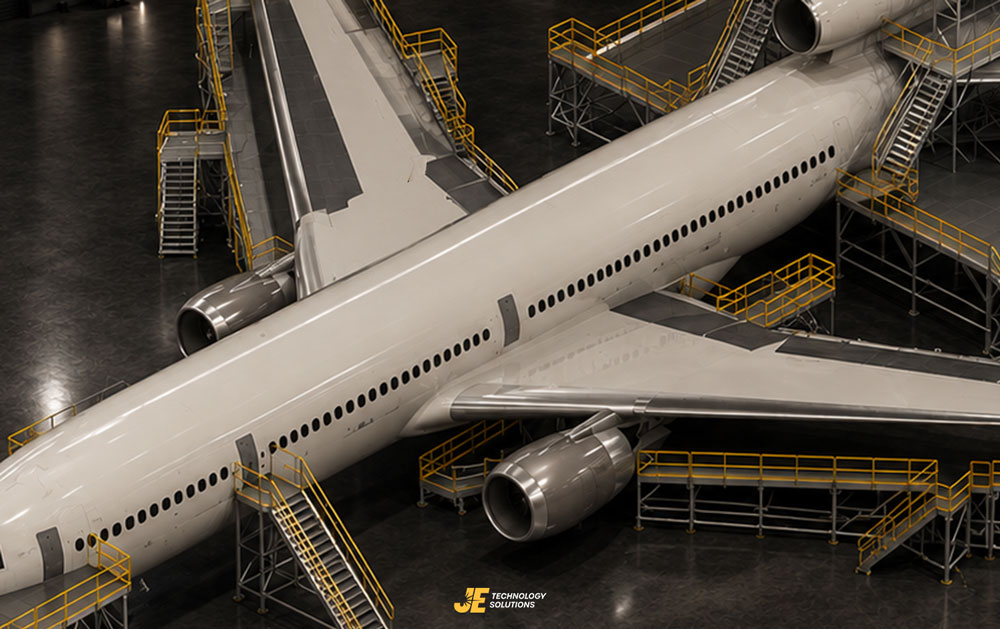
Support the required work area and operator movement around the equipment.
Apopka, Florida // Engineering & Manufacturing // Est. 2004

Contact For Pricing
JE considers geometry, movement, working height, access method, stability, facility conditions, and technician workflow before defining the solution. Each one changes a specific dimension of the stand — so each row names what it decides.
The technician needs position on more than one side at a fixed height, with the cowling open and parts coming off. That is why working height and operator movement are separate inputs here — and why a general-purpose platform rarely serves an engine bay well.
Six areas of scope, and every one stays tied to the approved application. JE can take all six or a single stage of them.
Support the required work area and operator movement around the equipment.
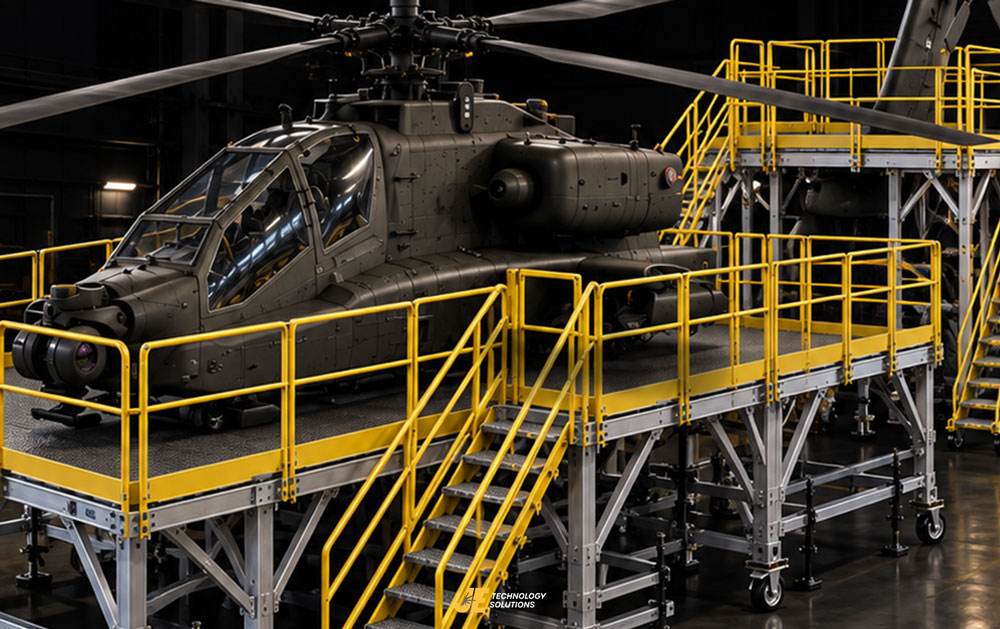
Treat guarding, working surfaces, and stability as part of the complete access system.
Adapt a current design or develop a new solution for unique geometry and workflow.
Move the approved solution through fabrication, assembly, finishing, and inspection.
Provide supporting records, drawings, and manuals as applicable to the scope.
Continue assisting the client after delivery where project requirements call for it.
Engine access sits inside the wider access family — the collection for your airframe, the fall-protection engineering that guards the deck, and the geometry discipline behind a stand drawn to one engine.

A custom nacelle maintenance fixture — engine-bay access engineered as a dedicated fixture rather than a general stand.

Access and fall protection engineered for F/A-18 maintenance operations.

A maintenance access system for a newer, larger maritime patrol platform.
Send the engine, the working height, and how the technician needs to move around it. That is enough to start.
Yes. The project begins by validating geometry, operational needs, safety requirements, workflow, and the scope of the requested adaptation.
JE can participate at different project stages, including engineering, machining, manufacturing, assembly, or complete end-to-end delivery.
The project lifecycle includes assembly and quality verification followed by supporting drawings, manuals, quality records, and continued support as applicable to the approved scope.
Share public-safe project details so the right JE specialist can review your application, requirements, and target timeline.
"*" indicates required fields