Apopka, Florida // Engineering & Manufacturing // Est. 2004

Engineered past the OSHA minimum

Fall Protection Systems Engineered to Exceed the Standard, Not Just Meet It

Passing an OSHA inspection and holding up under real working conditions aren’t always the same thing.
The OSHA floor, in three numbers

42 in

top rail height, ±3 in

200 lb

minimum force resistance

6 ft

exposure that triggers the requirement
JE engineers past all three.
01 The two standards

What Counts as OSHA- and ANSI-Compliant Fall Protection?

OSHA requires fall protection whenever workers are exposed to a fall of six feet or more, with the required system depending on the type of work being performed — guardrails, safety nets, or personal fall arrest systems, depending on the situation.

OSHA Legally enforceable

The minimum requirements — guardrail height, force resistance, and when a system is required at all.

OSHA's guardrail standard specifically requires a top rail height of 42 inches (plus or minus 3 inches) and the ability to withstand at least 200 pounds of force applied outward or downward.

ANSI Consensus benchmark

The consensus engineering standards that go further — structural performance and platform design.

Not always legally mandated, but the engineering benchmark that industries like oil and gas, chemical processing, and marine operations frequently build into their internal safety requirements.

OSHA guardrail standard // elevation MIN
Walking-working surface
42 in top rail
±3 in tolerance
200 lb minimum force, outward or downward
JE engineers connections and material strength to carry more
02 Engineering approach

How Does JE Engineer a Fall Protection System for Your Facility?

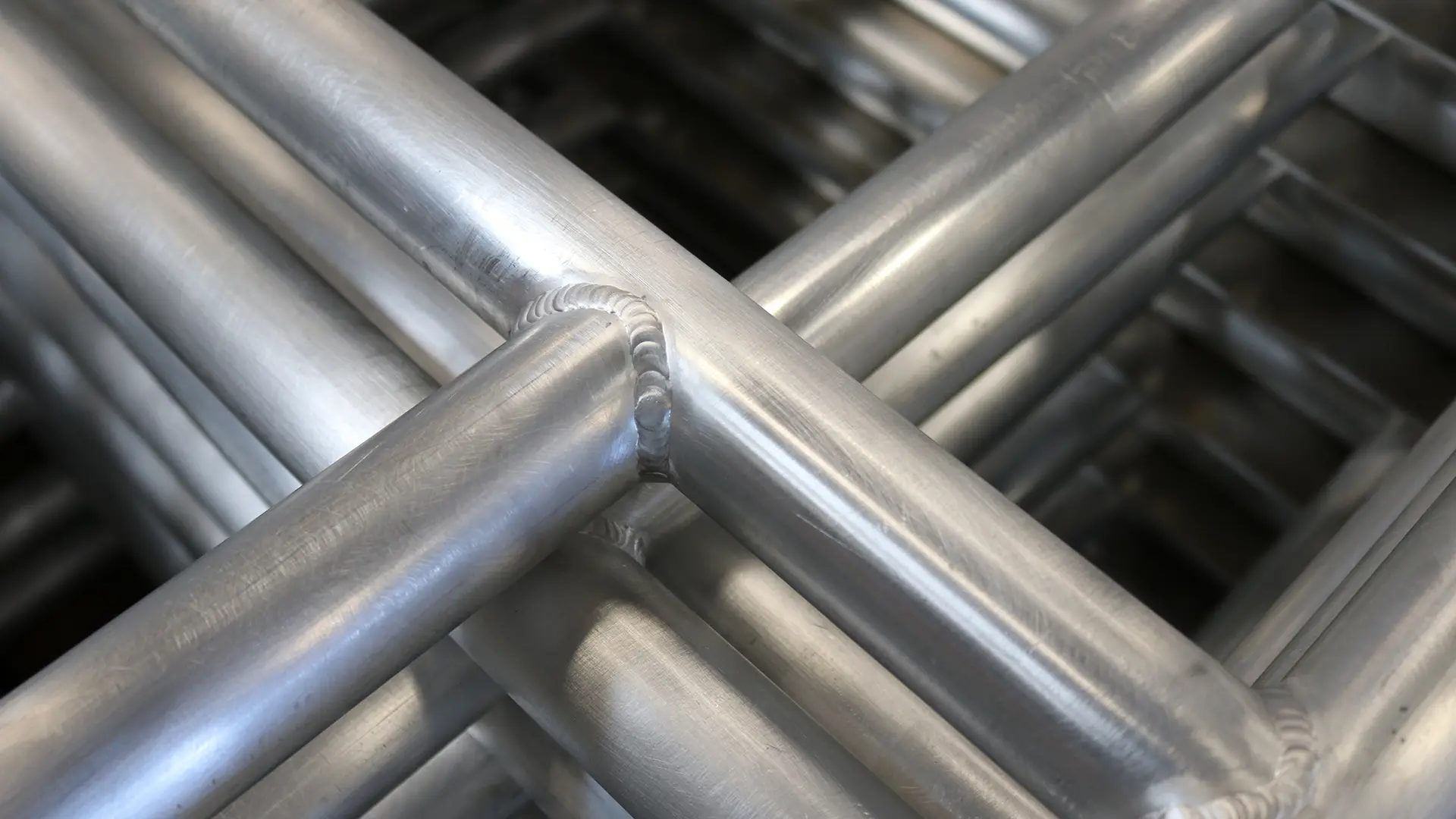
JE Technology Solutions engineers custom guardrail and fall protection systems designed to exceed minimum OSHA force thresholds, using reinforced connections and validated material strength rather than building to the minimum standard and hoping it holds.
03 Where it is needed most

Where Fall Protection Systems Are Needed Most

Fall protection is a requirement everywhere workers operate at height or near hazardous equipment — aircraft maintenance platforms, industrial gangways, rooftop access, and elevated work platforms across aerospace, marine, rail, and general industrial facilities.
04 Where JE excels

Where JE Excels

JE Technology Solutions positions itself as a leading provider of industrial gangway and fall protection systems, engineering connections and material strength to exceed minimum force thresholds rather than designing to the legal floor.
A1 · Advantage

Engineered past the minimum, not just to it

JE's guardrail and gangway systems are designed with reinforced connections and validated material strength specifically to exceed the 200-pound minimum force threshold OSHA requires — addressing the most common real-world failure point directly.

A2 · Advantage

Fluent in both OSHA and ANSI standards

JE's own technical guidance distinguishes between OSHA's legally enforceable minimums and ANSI's consensus engineering benchmarks, applying both where a facility's requirements call for it.

A3 · Advantage

Proven in demanding, safety-critical environments

JE's fall protection work spans Navy aircraft maintenance operations and other applications where a fall protection failure isn't just a compliance issue — it's a safety-critical one.

05 Explore the equipment

Explore JE's Fall Protection Products

Every route below leads to equipment engineered around the same principle described on this page — guardrail and gangway systems designed to exceed minimum OSHA and ANSI force thresholds, not just clear the legal floor.
06 Related projects and case studies

Related Projects and Case Studies

JE’s fall protection engineering has supported both Navy aircraft maintenance operations and deployable maintenance platforms — evidence that the same engineering discipline applies whether the system is fixed to a facility or built to move with the mission.

07 Technical & operational FAQ

Frequently Asked Question

Q01

What's the difference between OSHA compliance and ANSI standards for fall protection?

OSHA sets legally enforceable minimum requirements. ANSI develops consensus engineering standards that often exceed the OSHA minimum and are used as a benchmark for long-term structural performance, even where not legally mandated.

Q02

When is fall protection required by OSHA?

Whenever workers are exposed to a fall of six feet or more, or at any height when working near dangerous equipment such as machinery with gears, pulleys, belts, or hazardous materials.

Q04

Does JE's fall protection work apply to industries beyond aerospace?

Yes. Fall protection and gangway engineering principles apply across aerospace, marine, rail, and general industrial facilities — anywhere workers operate at height or near hazardous equipment.

Q05

Can JE design a fall protection system for a facility that doesn't have a single standard “compliant” configuration?

Yes. OSHA regulates walking-working surfaces based on performance criteria rather than a single universal design, which means facilities with non-standard layouts require engineering judgment — exactly the kind of custom design work JE's engineering team performs.

Q03
What’s the difference between fall prevention, restraint, and arrest systems?
01 · Passive barriers JE's approach

Prevention

Uses passive barriers, like guardrails, that don't require the worker to do anything.

02 · Movement limited JE's approach

Restraint

Physically limits a worker's movement so they can't reach a fall hazard.

03 · Catches a fall

Arrest

Catches a worker mid-fall if a fall does occur.

JE’s systems are typically engineered around passive prevention and restraint, which are inherently safer than relying on arrest.

Start Your Fall Protection Project

Need a fall protection or guardrail system engineered to outperform the minimum standard? Talk to JE’s engineering team about your facility’s specific hazards and requirements.

Guardrail systems  Engineered past the 200 lb minimum, not to it.