Apopka, Florida // Engineering & Manufacturing // Est. 2004
Apopka, Florida // Engineering & Manufacturing // Est. 2004
JE Technology Solutions provides MIG, TIG, pulsed MIG, and robotic welding services in Apopka, Florida, near Orlando, supporting custom parts, fabricated assemblies, and repeat production with engineering-through-delivery capabilities.
Looking for custom welding services in Central Florida? JETechFab, part of JE Technology Solutions, provides MIG, pulsed MIG, TIG, and robotic welding in Apopka, Florida, just outside Orlando. We build support frames, custom assemblies, and repeat-production weldments. Our team selects the welding process around your material, joint requirements, and production quantity.
What welding capabilities does JE offer?
Need more than welding?
JE also handles engineering, cutting, forming, machining, assembly, inspection, and delivery, with support after shipment. Big projects or small parts, bring them to JE.
Video Transcript:
Whether you’re building a support frame, putting together a custom assembly, or ordering a run of identical weldments, we’ll match the welding process to the job. I’m Ryan with JETechFab, part of JE Technology Solutions. We manufacture right here in Apopka, Florida, just outside Orlando. Here’s how we handle welding in our shop. We use MIG and pulsed MIG to join parts for frames, supports, and larger assemblies. For joints where the welder needs finer control over heat and filler, we can use TIG. We also have a Universal Robots welding system for suitable repeat work. With the parts held in a fixture, the robot can follow the same programmed weld path from one assembly to the next. The process we choose comes down to the material, the joint, and how many parts you need. We think about how the pieces will fit and how we’ll reach the weld before we cut or form the material. Big projects or small parts, bring them to JE. If you need a weldment, we can take on that piece of the job. If you need the whole build, our team can handle engineering, cutting, forming, welding, assembly, inspection, and delivery, with support after it ships. Schedule a call with our team. Let’s talk through what you’re building.
A support frame, a custom equipment assembly, and a production run of welded components can require different welding approaches. The right choice depends on the material, joint design, finish requirements, and number of parts you need.
JETechFab, part of JE Technology Solutions, provides MIG, pulsed MIG, TIG, and robotic welding in Apopka, Florida, just outside Orlando. Our shop supports custom components, prototypes, frames, supports, and repeat-production weldments, with engineering and fabrication capabilities available to carry the project further.
If you’re comparing welding services near Orlando, the following questions can help you define your project and understand which approach fits the work.
The challenge is not only reaching each area. It is creating a safe, repeatable, and efficient route between them.
When access relies on disconnected mobile stands, ladders, or isolated platforms, the access process itself can slow the work.
MIG and TIG describe welding processes. Robotic welding describes how the welding operation is performed. A robotic system moves a welding torch along a programmed path using a compatible welding process, such as MIG.
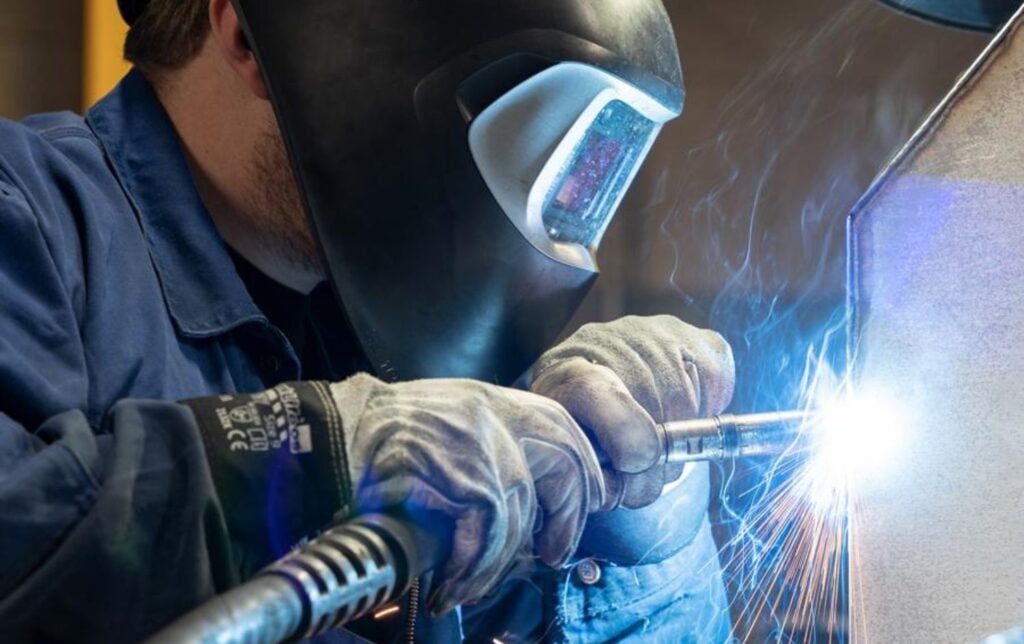
How It Works:
Continuously feeds a consumable wire electrode into the weld while shielding gas protects the weld area.
Where It Can Fits:
Frames, supports, fabricated assemblies, and production work where welding speed matters.
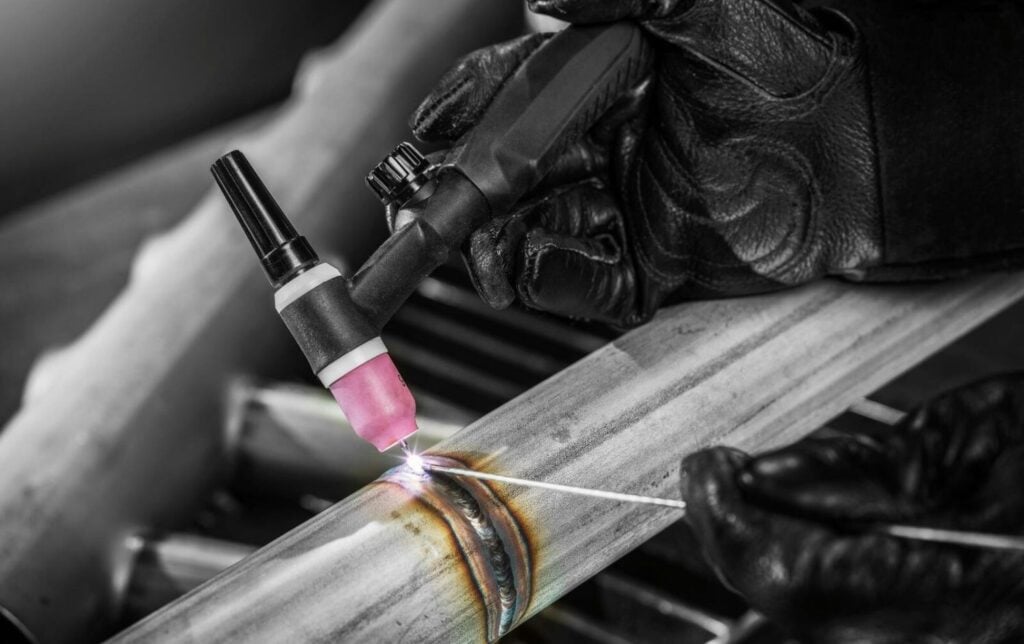
How It Works:
Uses a tungsten electrode, with filler added separately when required.
Where It Can Fits:
Detailed joints and applications requiring close control over heat, filler placement, and appearance.
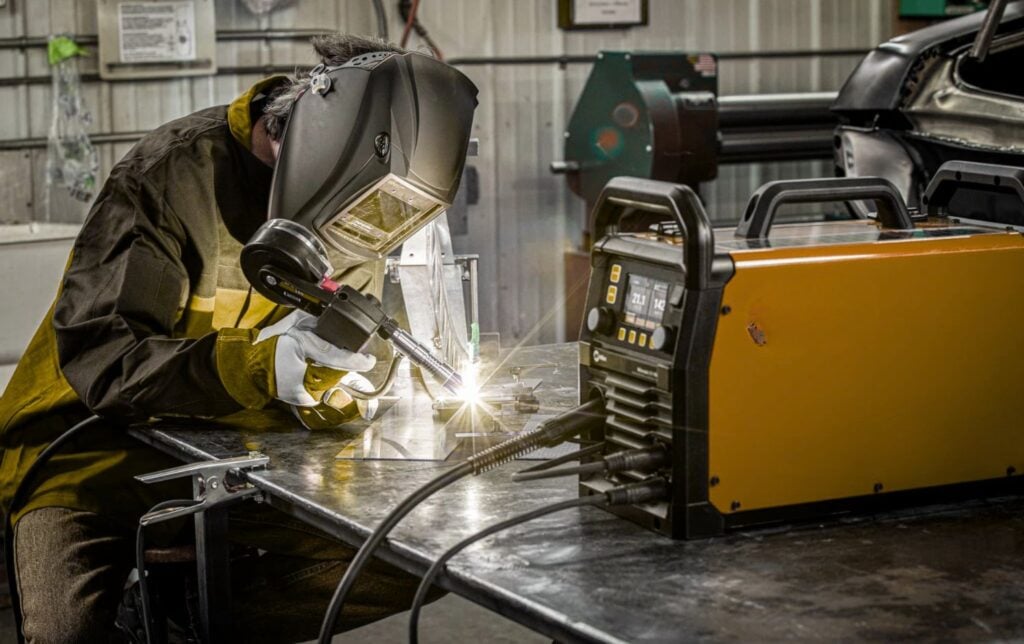
How It Works:
Alternates between higher peak current and lower background current to control metal transfer.
Where It Can Fits:
Suitable production applications where heat management and reduced spatter are priorities.
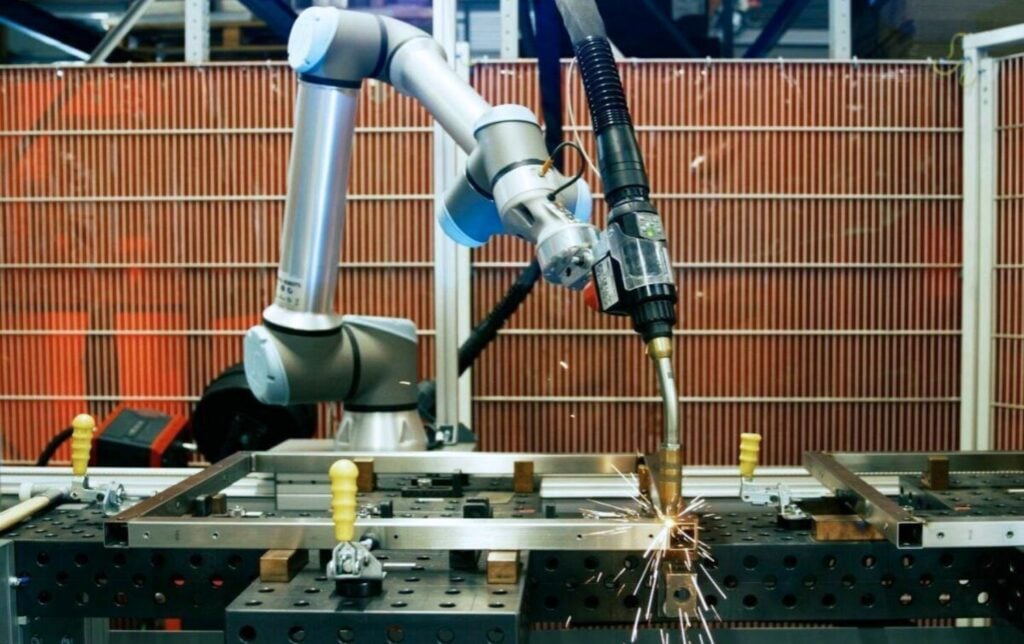
How It Works:
Uses a programmed robot to control torch movement while fixtures locate the components.
Where It Can Fits:
Repeat assemblies with consistent fit-up and accessible weld joints.
Process selection brings together productivity, material behavior, joint accessibility, and the required result. The drawing and application should guide that decision.
MIG welding is often a practical choice for fabricated frames, supports, and assemblies that need productive, repeatable joining. Its continuously fed wire supports efficient welding across suitable materials and joint configurations.
Pulsed MIG provides another way to control the process. The power source switches between peak and background current, helping manage metal transfer and heat input. In suitable applications, it can reduce spatter and the cleanup associated with it. These benefits depend on the material, transfer mode, and welding parameters.
For example, a business ordering repeat equipment supports may need consistent joints, predictable production, and parts ready for the next fabrication step. MIG or pulsed MIG may suit that work after the material and joint requirements are reviewed.
JE’s Miller Millermatic 350P systems support MIG and pulsed MIG welding for frames, supports, and larger weldments.

TIG welding is worth considering when a joint requires fine control over heat input, weld placement, or visible appearance.
The welder controls the torch, amperage, and filler addition separately. That control can be valuable for detailed joints and thin or heat-sensitive material. TIG generally takes more welding time than MIG, so the required finish and precision should be considered alongside production needs.
A custom component with an exposed joint, for example, may call for a different approach than a large fabricated support that will receive a specified coating.
JE uses Miller TIG systems for suitable custom components and assemblies, selecting the approach around the material and access to the joint.
Robotic welding is a candidate when the same joints can be presented consistently across repeated components or assemblies.
A fixture holds the parts in position while the robot follows a programmed weld path. That repeatable motion can support consistency and production efficiency. The incoming components must also fit together predictably, and the torch must be able to reach the required joints.
The evaluation should consider:
How consistently the components fit together.
Whether the robot can reach the welds.
The time required to load, unload, and reposition parts.
Fixture and programming requirements.
Batch size and expected repeat orders.
Smaller batches can also be candidates. Universal Robots documents small-batch welding applications, while Miller recommends evaluating setup, changeover, part consistency, and overall production needs when assessing automation. The economic fit comes from the complete job.
JE’s Universal Robots UR10e welding system supports suitable repeat work using fixtures and programmed weld paths.
Yes. JE lists aluminum, steel, and stainless steel among the materials supported by its MIG and TIG welding capabilities.
The specific alloy, thickness, joint, and service conditions still need to be reviewed for each project.
Aluminum illustrates why that review matters. Its thermal behavior affects how a weld is established and how thin sections respond to heat. TIG offers close control, while pulsed MIG can provide a productive alternative for suitable aluminum applications.
When requesting a quote, identify the material grade whenever possible. “Aluminum” or “stainless steel” is a starting point. A specific alloy and thickness give the fabricator more useful information.
A simple assembly with accessible joints presents a different workload than one requiring extensive fitting, repositioning, or custom fixtures. Production quantity also changes how setup and programming costs are distributed across the order.
Miller’s manufacturing guidance identifies labor, part handling, fitting, setup, and rework as important factors in welding productivity and cost. Those activities explain why two projects with similar weld lengths can require different amounts of work.
To help a fabricator evaluate your project, share:
Drawings, models, or a dimensioned sketch.
Material grade and thickness.
Quantity per order and expected repeat demand.
Weld locations, sizes, and any specified procedures.
Critical dimensions and tolerances.
Appearance and finish requirements.
Inspection, documentation, and applicable code requirements.
Required delivery date and destination.
These details help define the scope before pricing and scheduling are finalized.
The quality and consistency of the prepared components affect how efficiently an assembly can be welded.
If parts arrive with varying gaps or connection details, additional fitting and adjustment may be required. That variation is especially important in robotic work, where consistent part preparation helps the system repeat the intended weld. Miller identifies upstream fabrication and fit-up as central considerations in welding automation.
For a tubular frame, for example, planning can address how the tube ends meet, how the components are located, and whether the torch can reach each joint.
JE combines cutting, forming, machining, welding, and assembly in its Apopka facility. Its fabrication capabilities include tab-and-slot geometry that helps locate components for the welding and assembly steps that follow. Keeping those operations coordinated allows connection details to be considered earlier in the build.
JE can support a focused manufacturing task or a broader project that includes engineering and assembly.
You can bring an existing drawing package or begin with the function the part needs to perform. Engineering support can help resolve geometry, material choices, connections, and assembly requirements before manufacturing.
Depending on the project scope, JE can coordinate cutting, forming, machining, welding, finishing, and final assembly. That gives customers a way to source a weldment or carry a larger build through multiple operations with one team.
For a prototype, that conversation may focus on validating the design and fit. For repeat production, it may focus on consistent components, fixtures, and inspection requirements.
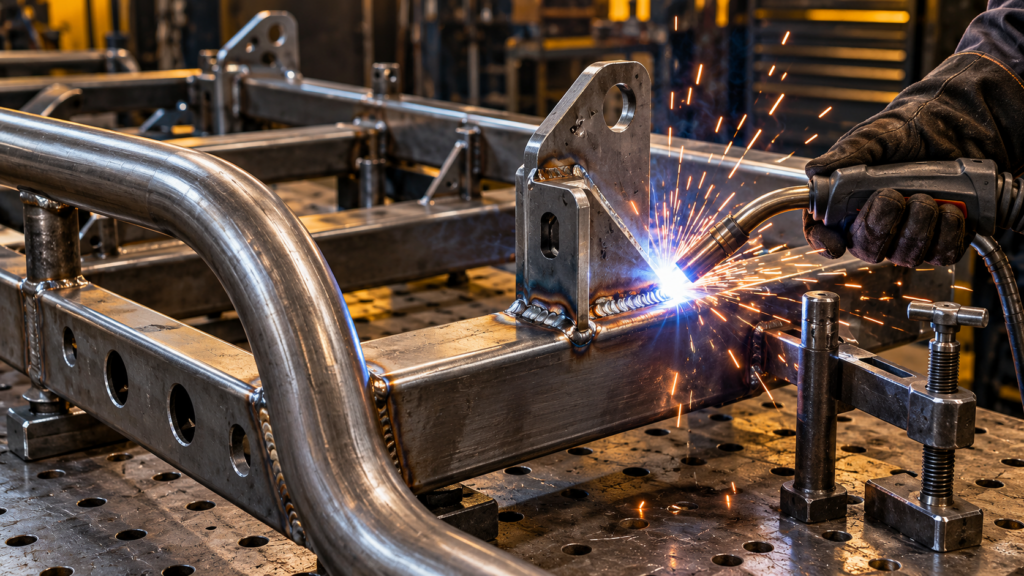
We help Central Florida customers turn drawings into custom components, prototypes, and production parts, with engineering, welding, and assembly support available to carry the work further.
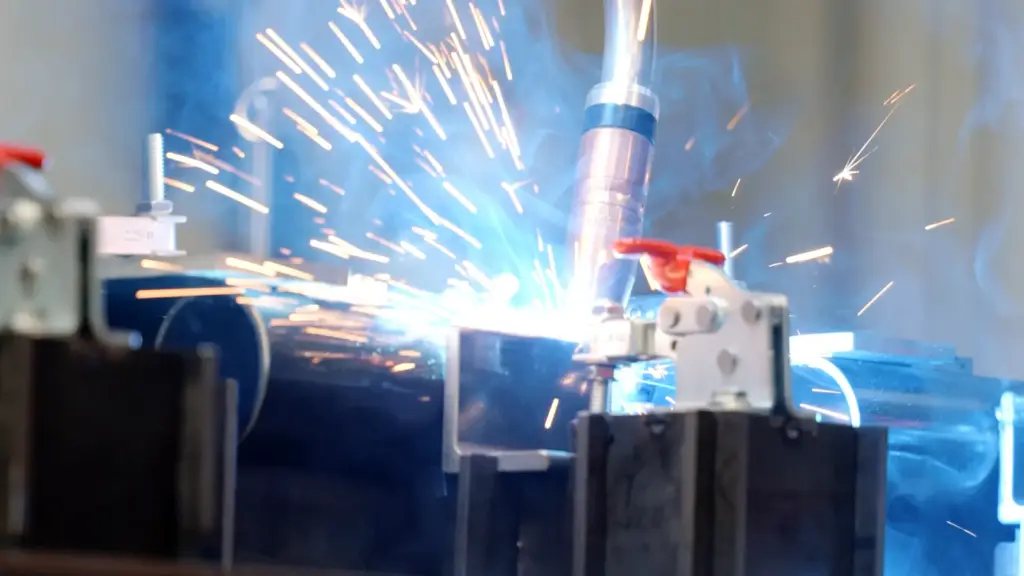
Whether you need a support frame, a custom assembly, or repeat-production weldments, start with what the finished part must accomplish.
Big projects or small parts, bring them to JE. Our team in Apopka, Florida, just outside Orlando, can review your requirements and discuss the manufacturing support your project needs.
Share your drawings, material specifications, quantities, and required delivery date. We’ll review the scope and discuss the next steps for your welding project.
Talk with our team about your application, connection details, or production requirements. We can help you determine the manufacturing support your project needs.

To provide the best experiences, we use technologies like cookies to store and/or access device information. Consenting to these technologies will allow us to process data such as browsing behavior or unique IDs on this site. Not consenting or withdrawing consent, may adversely affect certain features and functions. Learn More at JETechnologySolutions.com/privacy-policy
Schedule a meeting with our team to discuss your project requirements, safety challenges, and operational goals. We’ll help you identify the right solution for your work environment.