Apopka, Florida // Engineering & Manufacturing // Est. 2004

Case study · U.S. Marine Corps

V-22 Osprey Nacelle Maintenance Fixture

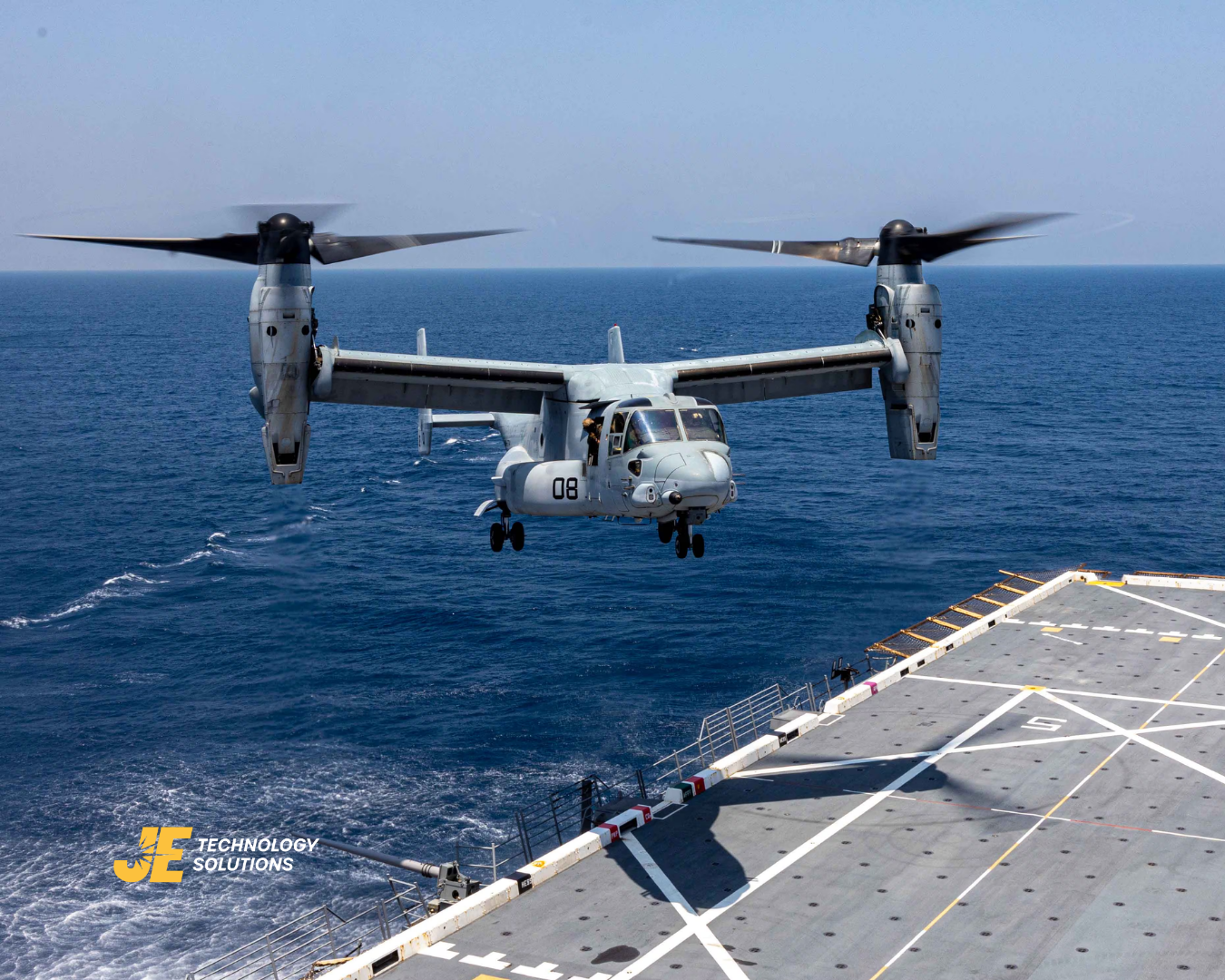
The nacelle houses the tiltrotor’s engine and gearbox systems, making it one of the most complex components on the aircraft to service safely.
Project record
Build to print
01
The challenge

The Most Complex Component on the Aircraft

The V-22’s tiltrotor nacelle system demands extreme precision and uncompromising safety protocols, housing critical engine and gearbox systems. Existing maintenance processes needed a safer, more repeatable solution to reduce operational risk during nacelle removal and installation — with strict adherence to military engineering specifications.
A nacelle that isn’t fully supported during removal risks damage to the component and the airframe around it — which is why the fixture, not the technique, had to carry the precision.
Fabricated to Marine Corps drawings, then validated against the aircraft it serves.

Constraint 01

Large component handling

The nacelle’s size and weight required structurally stable support during maintenance.

Constraint 02

Safe elevated access

Personnel needed secure, OSHA-aligned elevated access while working around the aircraft.

Constraint 03

Military protocol compliance

Strict adherence to predefined engineering specifications and military aviation standards.
02
The solution

Build to Print — the Customer's Drawings, JE's Fabrication

JE Technology Solutions fabricated a custom build-to-print nacelle fixture engineered specifically for V-22 maintenance operations, deploying directly to the Marine Corps Air Station to support final assembly and validate the fixture against active aircraft geometry.
WHO OWNS WHICH STAGE // ENGAGEMENT MODEL BUILD TO PRINT
SPECIFICATION DRAWINGS FABRICATION ON-SITE ASSEMBLY & VALIDATION
MARINE CORPS MARINE CORPS JE JE
Marine Corps owned JE owned

Build-to-print means the design authority stays with the customer. JE's contribution is fabrication accuracy and on-site validation — which on a fixture this precise is where the risk actually sits.

S1

Precision fixture fabrication

Manufactured to build-to-print specifications provided by the Marine Corps.

S2

Integrated maintenance access support

Fixture design supported safer elevated procedures around the aircraft.

S3

On-site assembly and validation

JE deployed directly to the air station for final assembly and operational validation.
03
The result

Validated On Site at an Active Marine Corps Air Station

Rather than shipping a finished fixture unverified, JE deployed its team directly to MCAS Cherry Point, North Carolina, to perform final assembly and confirm the fixture aligned correctly with active aircraft geometry before operational handoff.
Handoff route // ship vs validate
JE VALIDATED
Ship it finished Unverified Fitment discovered on arrival
Fabricate Crate Ship Customer discovers fit
What JE did Validated in place Fitment confirmed before handoff
Fabricate Deploy team Assemble on site Validate to aircraft
Fitment risk carried to the customer Fitment confirmed before handoff

I1

Improved personnel safety

Integrated fall protection reduced elevated-maintenance risk.

I2

Reduced equipment damage

Precision fixture alignment minimized risk of nacelle or structure damage.

I3

Improved maintenance efficiency

Streamlined nacelle removal and installation procedures.

I4

Operational repeatability

Standardized workflows improved consistency across personnel and shifts.
04
Capabilities demonstrated

Fabrication Accuracy, Verified in Place

Core competencies demonstrated on this project, from build-to-print fabrication through on-site validation.
05
Technical & operational FAQ

Frequently Asked Questions

Q01

Was this a JE-designed fixture or a build-to-print engagement?

This was a build-to-print engagement — JE fabricated the fixture to specifications provided by the Marine Corps rather than an original design.
Q02

Did JE support installation, or only fabrication?

Both. JE deployed directly to the Marine Corps Air Station to oversee final assembly and functional validation, ensuring accurate integration with active aircraft geometry.
Q03

Why does on-site validation matter on a fixture like this?

Because a nacelle fixture has to align with the actual aircraft, not just the drawing. Confirming fitment against active aircraft geometry before operational handoff means any discrepancy is resolved by JE’s team on site rather than becoming the customer’s problem after delivery.

Let's Turn Your Requirements Into a Solution

Have drawings already approved and need a fabrication partner who will verify fitment in place rather than at the loading dock?
Nacelle fixtureCustody of the component, start to finish.